How Do I Calculate Early Mortgage Payoff

Last month, my friend Jake called me panicking about his mortgage. “I want to pay this thing off early, but how do I calculate early mortgage payoff? The bank gave me some confusing spreadsheet that made zero sense.”
Sound familiar? You’re definitely not alone. Most people want to escape their mortgage prison early, but the math feels overwhelming. Here’s the truth – it’s way simpler than the banks make it seem.
Why Early Mortgage Payoff Calculation Matters
Before diving into the “how,” let’s talk about the “why.” When you figure out how do I calculate early mortgage payoff, you’re basically creating a roadmap to financial freedom.
My neighbor Lisa discovered she could pay off her 28-year remaining mortgage in just 18 years by adding $200 monthly. That calculation showed her exactly how much interest she’d avoid – nearly $47,000. Suddenly, those extra payments felt less like sacrifice and more like the best investment ever.
The Simple Math Behind Early Payoff
Here’s what shocked me when I first learned this: every extra dollar you pay goes straight to your principal balance. None of it gets eaten by interest charges.
Think about your regular monthly payment. Part goes to interest, part goes to principal. But extra payments? They attack your loan balance directly.
Let’s say you owe $200,000 at 4.5% interest with $1,200 monthly payments. If you add just $100 extra each month, you’ll knock off about 4.5 years from your loan term. That’s real money staying in your pocket.
Three Ways to Calculate Your Early Payoff
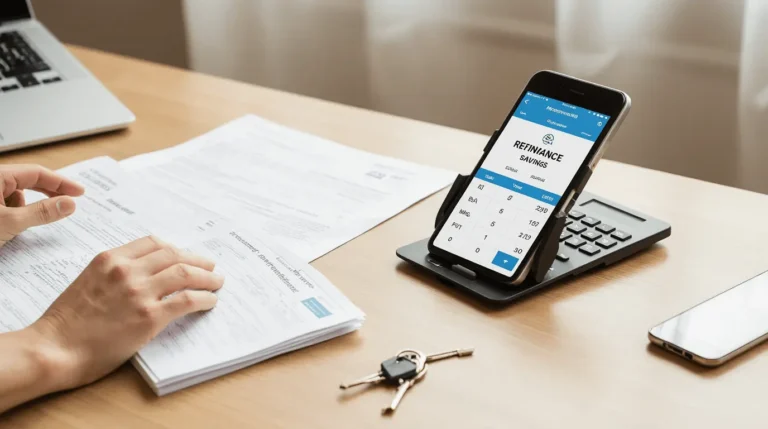
Method 1: Online Calculators (The Easy Route) Honestly, this is where most smart people start. You plug in your current balance, interest rate, and potential extra payment amount. The calculator spits out your new payoff date and total savings. we used this globale mortgage Early Payoff calculator.
Method 2: Spreadsheet Magic Create columns for payment number, payment amount, interest portion, principal portion, and remaining balance. Each month, calculate interest as (remaining balance × annual rate ÷ 12). Subtract that from your total payment to get principal reduction.
Method 3: The Quick Estimation Trick For rough estimates, remember this rule: every extra $100 monthly typically saves about 4-6 years on a 30-year mortgage, depending on your rate and balance.
Real Examples That Make Sense
Take Maria from Phoenix. She owed $185,000 at 3.75% interest, paying $1,150 monthly. When she asked how do I calculate early mortgage payoff, we ran the numbers together.
Her standard payoff: 18.2 years remaining With $150 extra monthly: 14.8 years (saved 3.4 years) With $300 extra monthly: 12.1 years (saved 6.1 years)
Maria chose the middle option. Why? Because $300 felt too tight for her budget, but $150 was totally manageable.
Common Calculation Mistakes People Make
Don’t assume your mortgage statement shows the right remaining balance for calculations. Those numbers often include escrow accounts for taxes and insurance. You need the pure loan balance.
Also, some folks forget about PMI removal. If you’re paying private mortgage insurance, factor in when that drops off (usually at 20% equity). This changes your effective payment amount.
Another gotcha: adjustable rate mortgages. If your rate changes, your calculations change too. Fixed rates make this whole process much more predictable.
The Psychology of Seeing Your Numbers
Something amazing happens when you actually run these calculations. Your mortgage transforms from this mysterious financial monster into something concrete and beatable.
I’ve watched friends get genuinely excited about making extra payments once they see the math. “Wait, an extra $75 monthly saves me $23,000 over the life of the loan?” Suddenly, skipping a few restaurant meals feels totally worth it.
Smart Strategies for Extra Payments
Rather than committing to huge extra amounts, start small. Many people begin with rounding up their payments. If you pay $1,247 monthly, round to $1,300. That’s $53 extra, and it adds up faster than you’d think.
Seasonal bonuses work great too. Tax refunds, work bonuses, or gift money can make significant dents in your principal balance.
Some families designate windfall money for mortgage payoff. Found $20 in an old jacket? Mortgage payment. Got a small rebate check? Same thing.
Ready to crunch your own numbers? Try our early payoff calculator at [your calculator URL] and see exactly how different payment strategies affect your timeline.
Frequently Asked Questions
How do I calculate early mortgage payoff without complicated formulas? Use online calculators or mortgage apps that do the math automatically. Enter your loan details and extra payment amounts to see instant results and potential savings.
What’s the fastest way to pay off my mortgage early? Focus on consistent extra principal payments rather than occasional large payments. Even modest amounts like $50-100 extra monthly can cut years off your loan term and save thousands in interest.