What Does Vested Mean in 401k? The Truth About Your Retirement Money
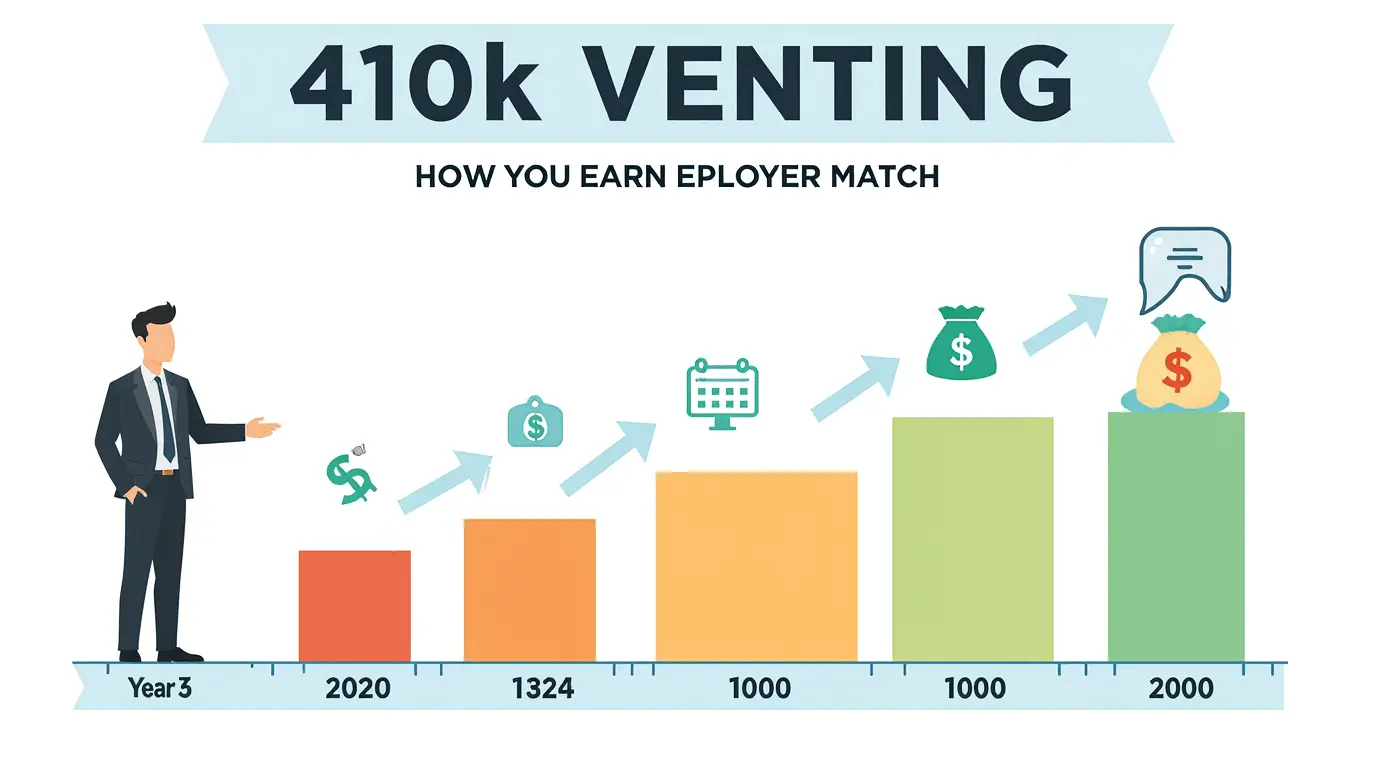
Vesting in a 401k plan determines how much of your employer’s contributions you actually own.
Understanding vesting schedules can help you avoid losing thousands of dollars and make smarter career decisions.
Last month, my neighbor Sarah told me something that made my jaw drop. She’d been working at her company for three years, contributing to her 401k religiously, only to discover she’d lose half her retirement savings if she quit before hitting her five-year mark. “Wait, what does vested mean in 401k plans anyway?” she asked, panic in her voice.
Here’s the thing – Sarah’s not alone. Millions of workers have no clue about vesting schedules, and it’s costing them serious money.
This guide helps you understand 401k vesting schedules, employer contributions, and retirement savings strategies.
It is essential for financial planning, maximizing retirement benefits, and avoiding costly mistakes.
Table of Contents
Why Vesting Rules Can Make or Break Your Retirement Dreams
Something I’ve noticed after helping friends navigate their 401k plans: the people who understand vesting schedules retire with significantly more money. We’re talking tens of thousands of dollars in difference.
Honestly, it’s like having a secret weapon in your retirement arsenal.
What does vested mean in 401k terms? Simply put, vesting determines how much of your employer’s contributions you actually own. Think of it as earning ownership rights to free money over time.
The Simple Truth About 401k Vesting
Your own contributions? Those are 100% yours from day one. No questions asked.
But here’s where it gets interesting – your employer’s matching contributions come with strings attached. Most companies use either:
Cliff Vesting
You own zero percent of employer contributions until you hit a specific milestone (usually 3-5 years). Then boom – you suddenly own 100%.
Graded Vesting
You gradually earn ownership rights each year. Typically 20% per year over five years.
My friend Mike in Denver learned this the hard way. He left his job after four years and eight months with a cliff vesting schedule. That two-month difference cost him $18,000 in employer contributions. Ouch.
Will My Employer Know If I Take a 401k Loan?
Read Article →Real Examples That’ll Make You Check Your Plan Tomorrow
Let’s say you contribute $200 monthly and your employer matches $100. After three years:
Sarah’s situation (5-year cliff vesting):
- Her contributions: $7,200 (100% hers)
- Employer contributions: $3,600 (0% hers if she leaves)
- Total she’d keep: $7,200
Compare that to graded vesting:
- Her contributions: $7,200 (100% hers)
- Employer contributions: $3,600 (60% vested = $2,160)
- Total she’d keep: $9,360
Not bad, right?
To better plan your retirement, use our retirement calculator, estimate long-term growth with our compound interest calculator, or compare savings strategies using our 401k calculator.
The Costly Mistakes I’ve Watched People Make
Here’s what shocks me: smart people make dumb vesting decisions all the time.
Mistake #1: Leaving right before becoming fully vested My coworker Jessica quit six months before her cliff vesting kicked in. She walked away from $22,000 because she didn’t check her schedule.
Mistake #2: Not factoring vesting into job negotiations When you’re comparing job offers, include potential forfeited 401k benefits in your calculations.
Mistake #3: Ignoring partial vesting opportunities Some people think “not fully vested” means “worthless.” Wrong! Even 40% of something is better than nothing.
Related Financial Tools
The Psychology Behind Smart Vesting Decisions
Something amazing happens when you understand your vesting schedule – you start making strategic career moves instead of emotional ones.
I’ve watched friends get genuinely excited about hitting their vesting milestones. It’s like unlocking achievement levels in your career.
Here’s my insider knowledge: Most people underestimate how much unvested money they’re leaving behind. That revelation changed everything for how I advise friends on job changes.
Practical Tips That Actually Work
Check your vesting schedule today. Seriously, stop reading and pull up your 401k summary. I’ll wait.
Found it? Here’s what to do next:
- Mark your full vesting date on your calendar
- Factor vesting into any job change timeline
- Consider negotiating start dates around vesting schedules
- Ask new employers about their vesting terms upfront
Pro tip: If you’re close to vesting, sometimes staying a few extra months is totally worth it financially.
Take Action on Your 401k Knowledge
Ready to see how vesting affects your specific situation? Ready to see how vesting impacts your retirement? Use our free 401k Calculator to estimate your savings, avoid losing employer contributions. and make informed decisions about your retirement timeline.
Don’t let unclear vesting rules cost you thousands like they almost did Sarah.
Quick Vesting FAQ
Q: Can my employer change the vesting schedule?
A: They can change it for future contributions, but not retroactively for money already earned under the old schedule.
Q: What happens to unvested money if I get fired?
A: You forfeit unvested employer contributions, but your own contributions are always 100% yours.